Dry ridge and verge
Dry ridge and dry verge
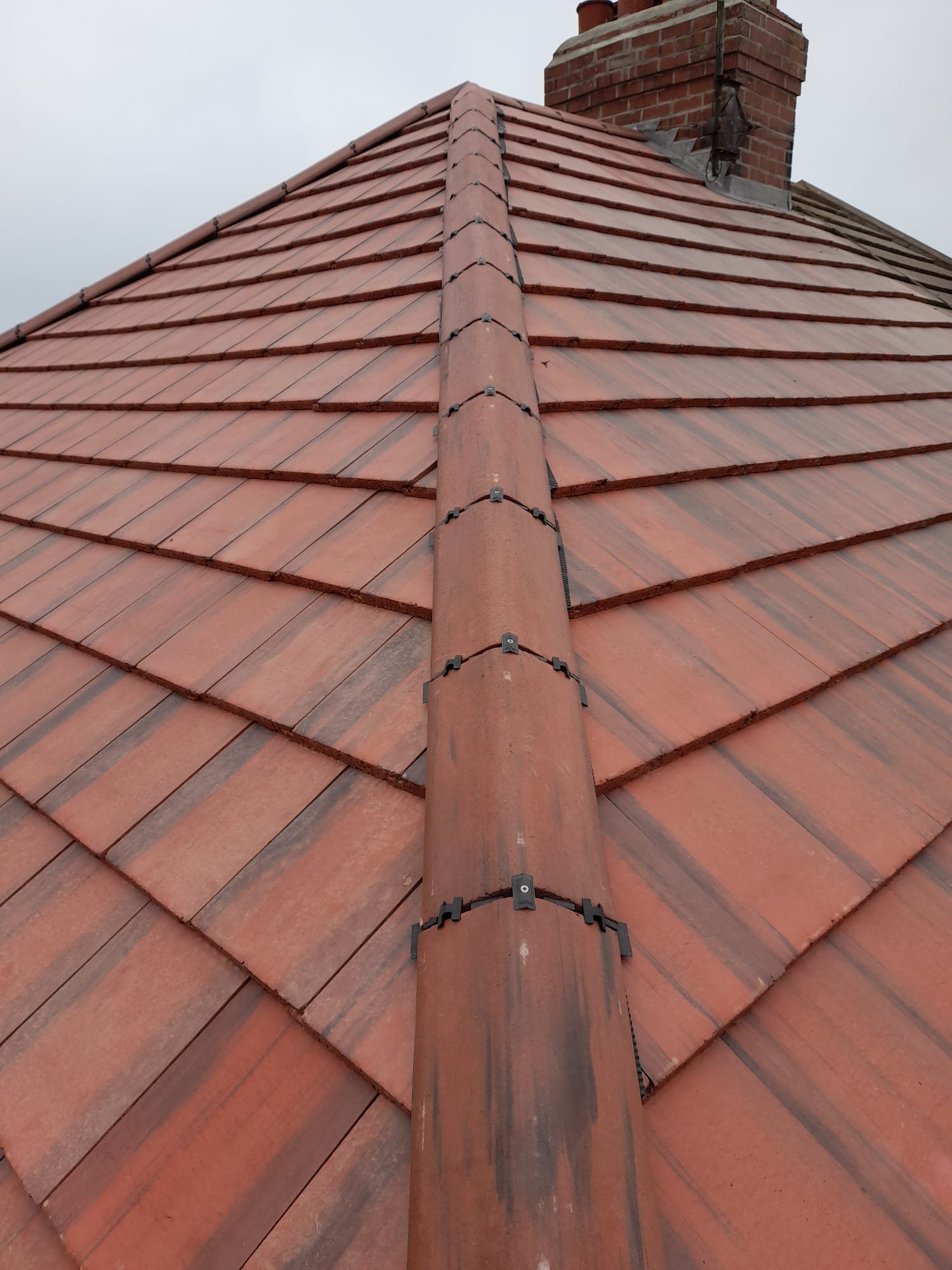
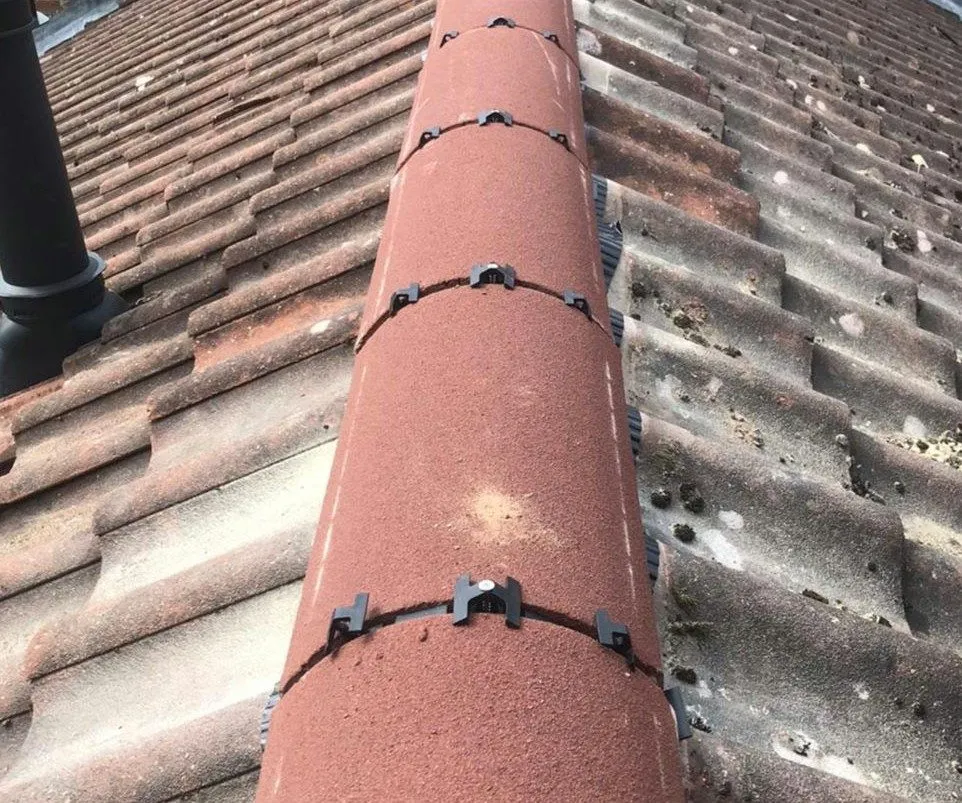
Ridge and verge tiles fixed mechanically, with no mortar to crack, wash out and let the wind in.
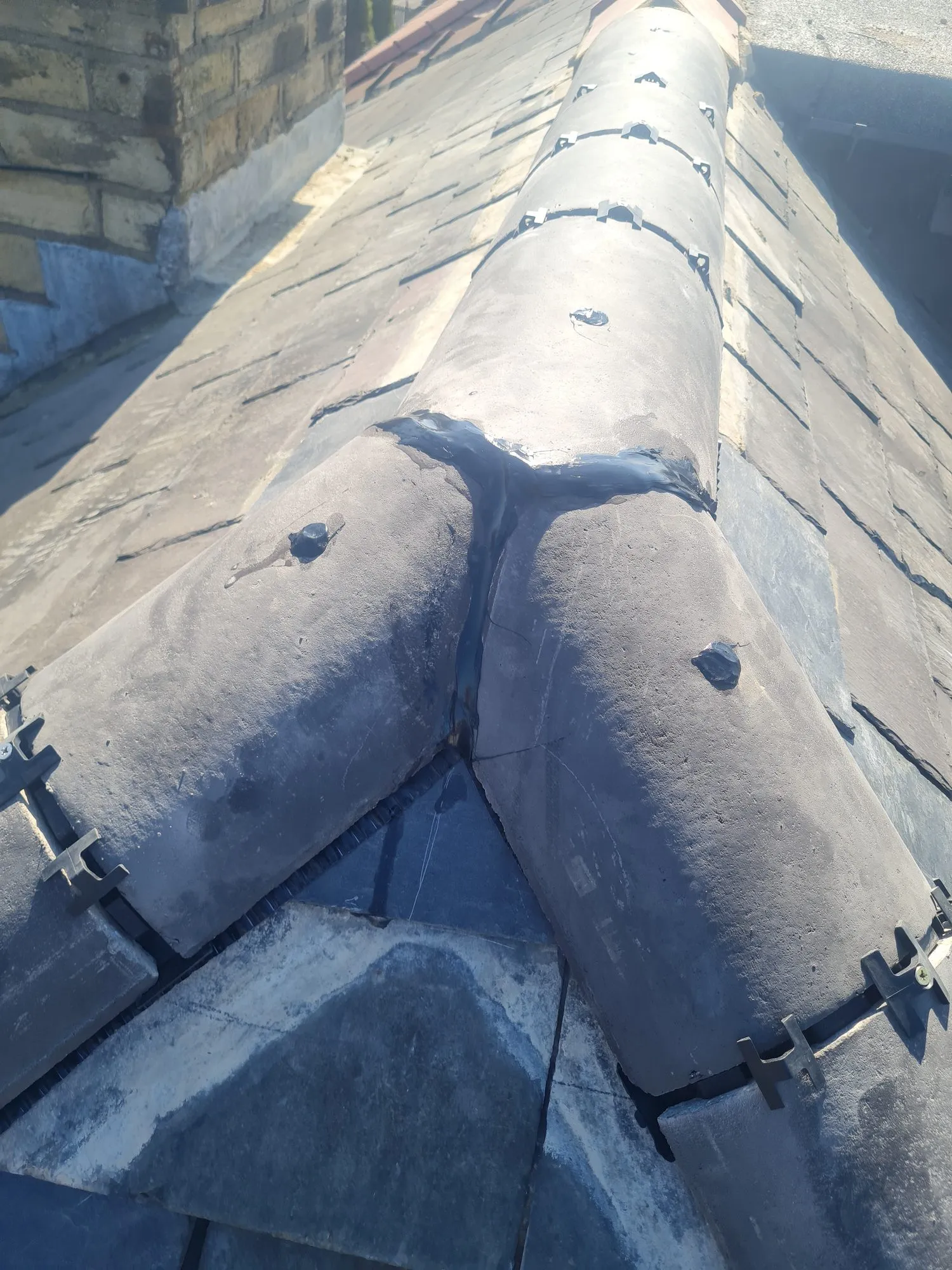
On older roofs the ridge, hip and verge tiles are bedded in sand and cement. Over the years the mortar shrinks, cracks and falls out, faster on an exposed coast, and a loose ridge tile can be lifted off in a storm.
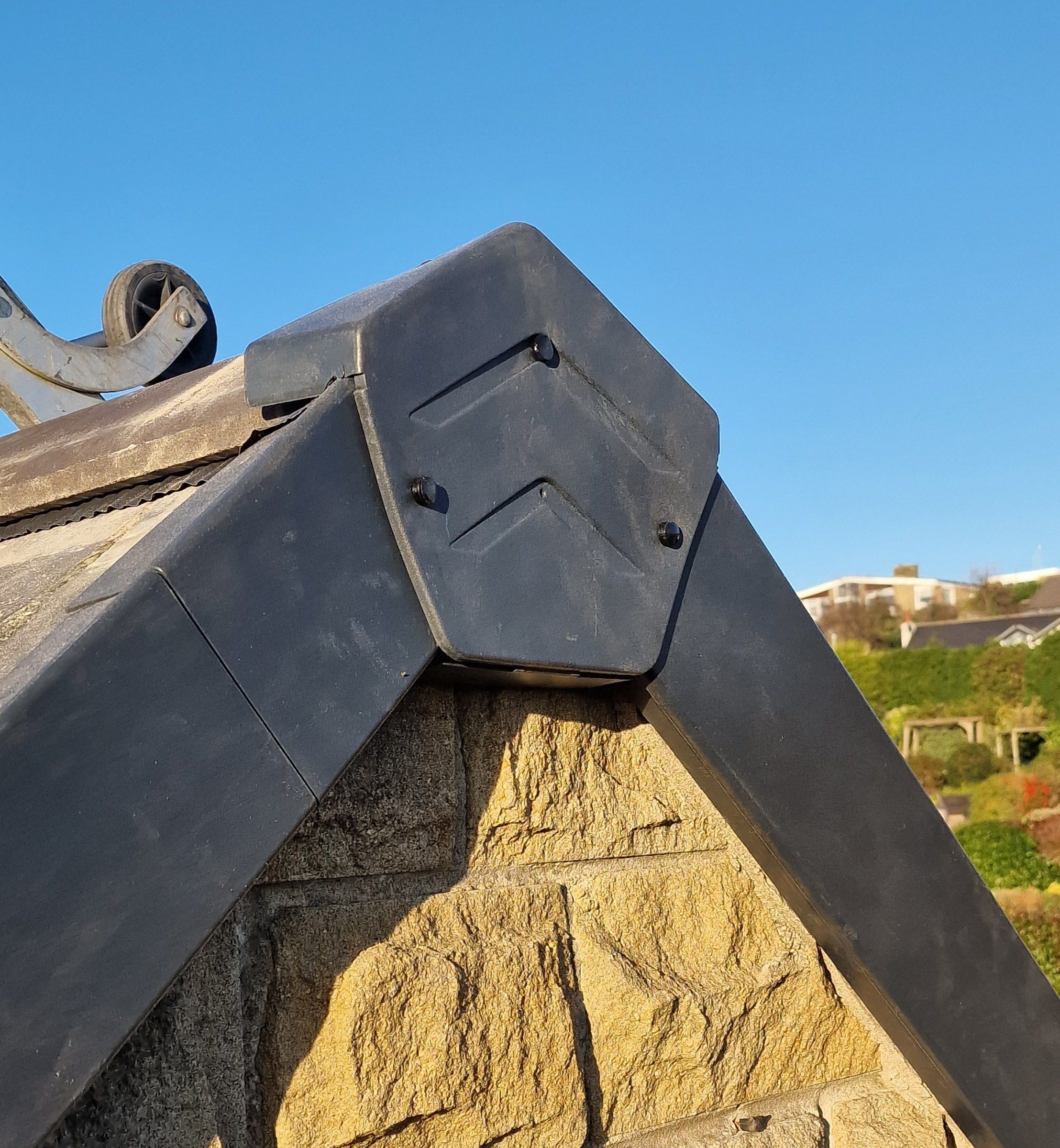
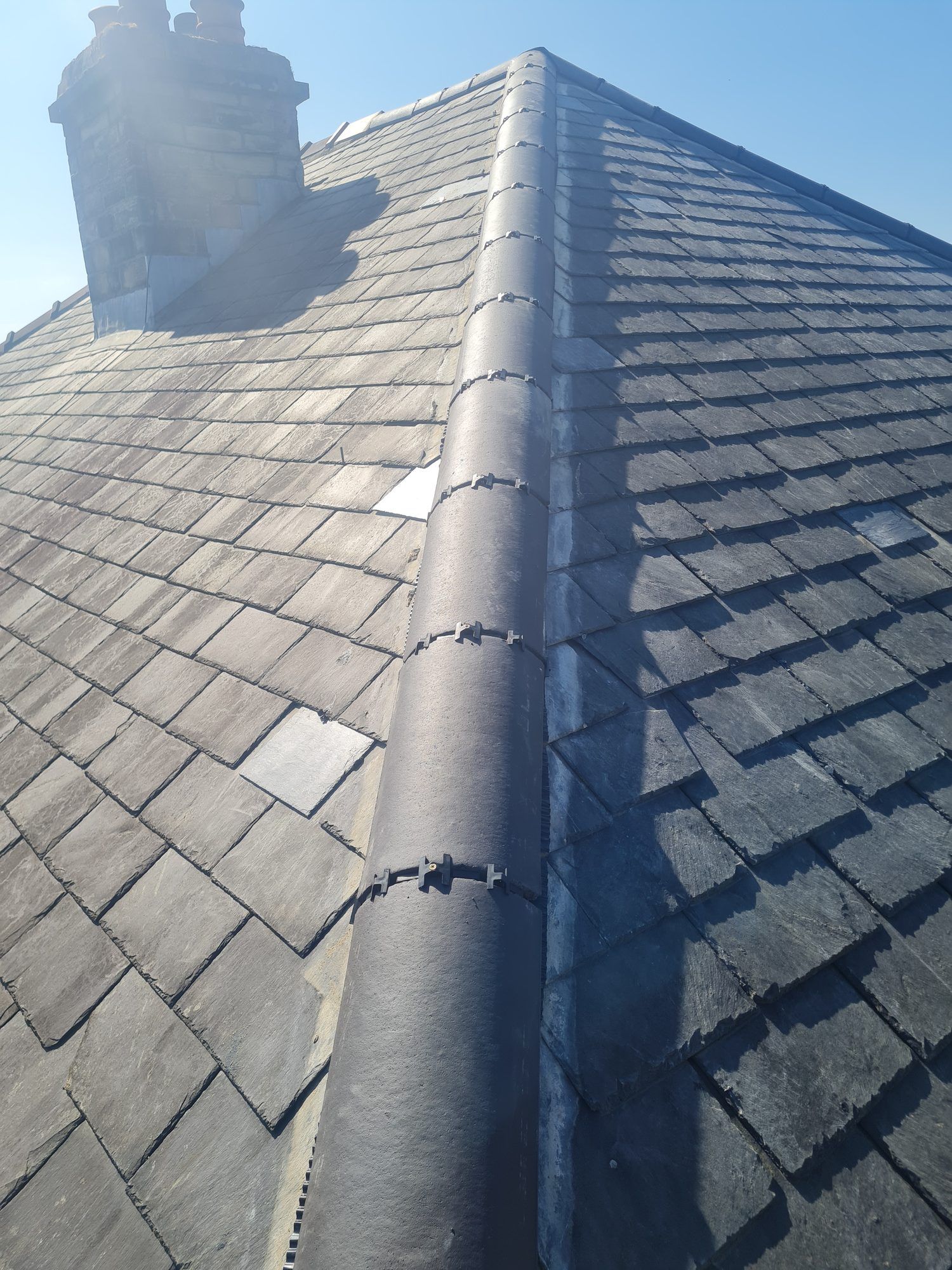
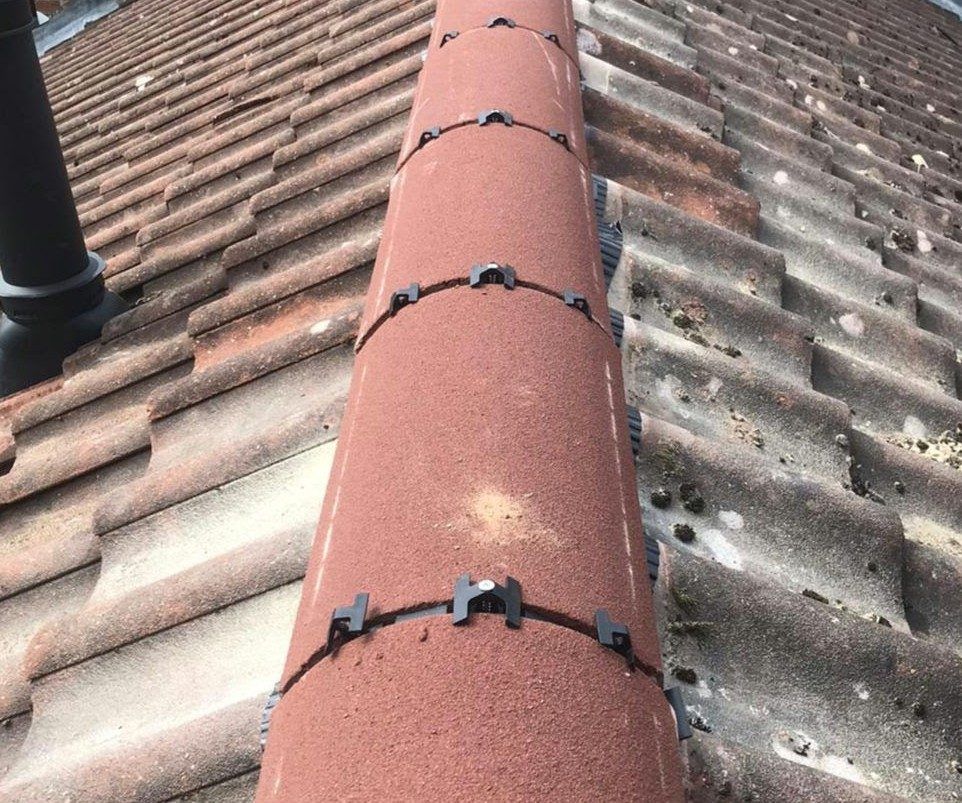
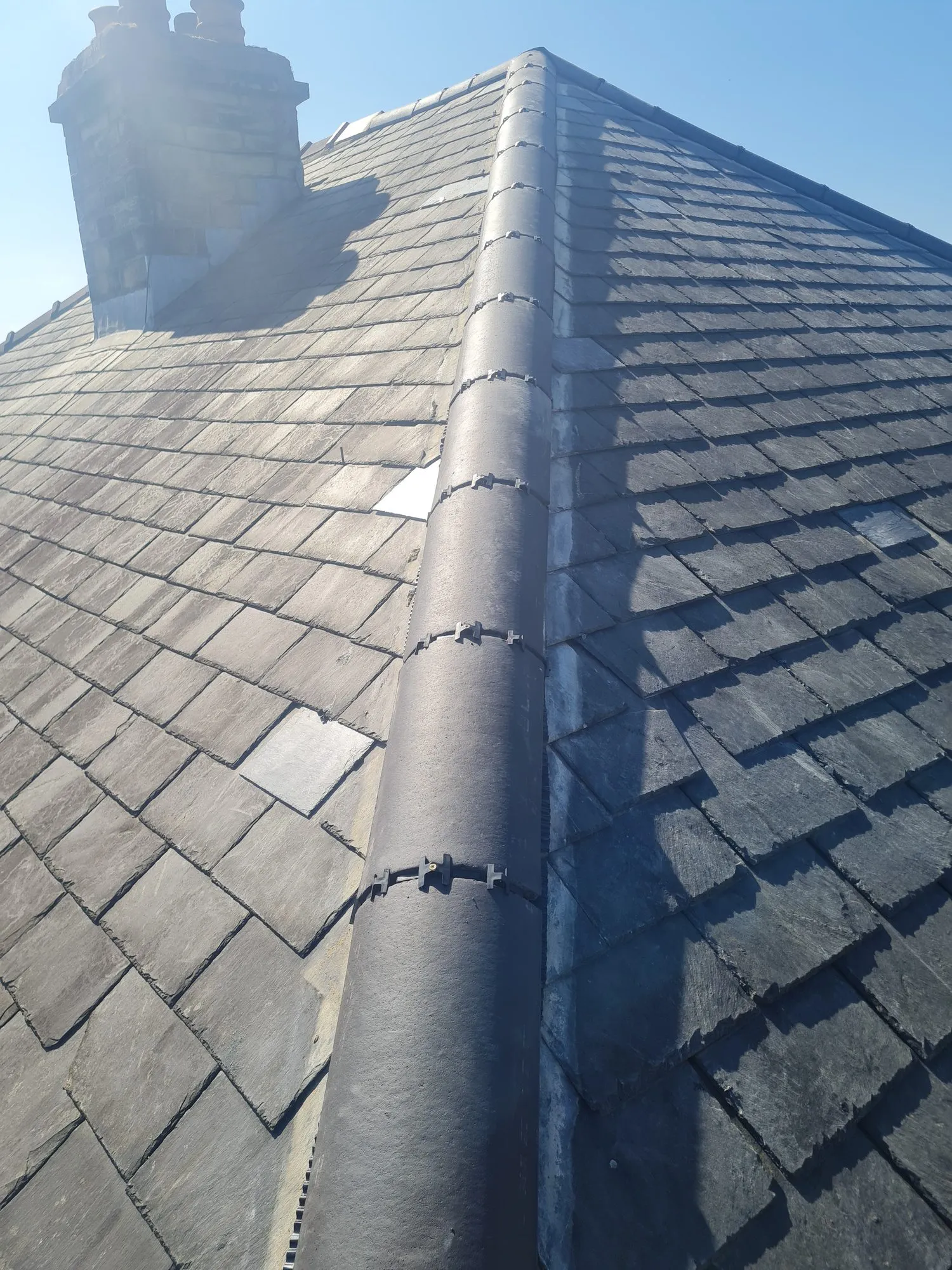
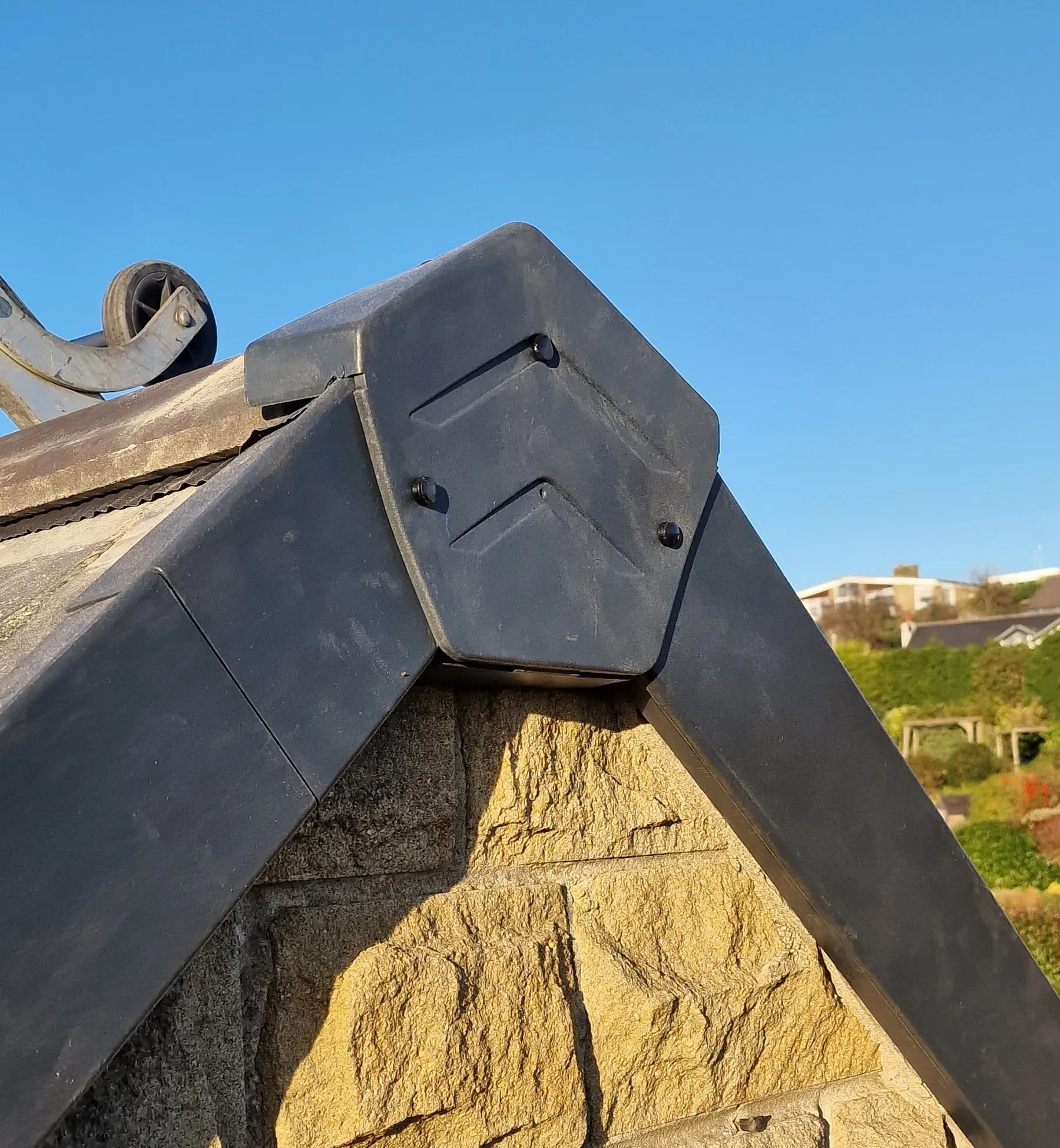
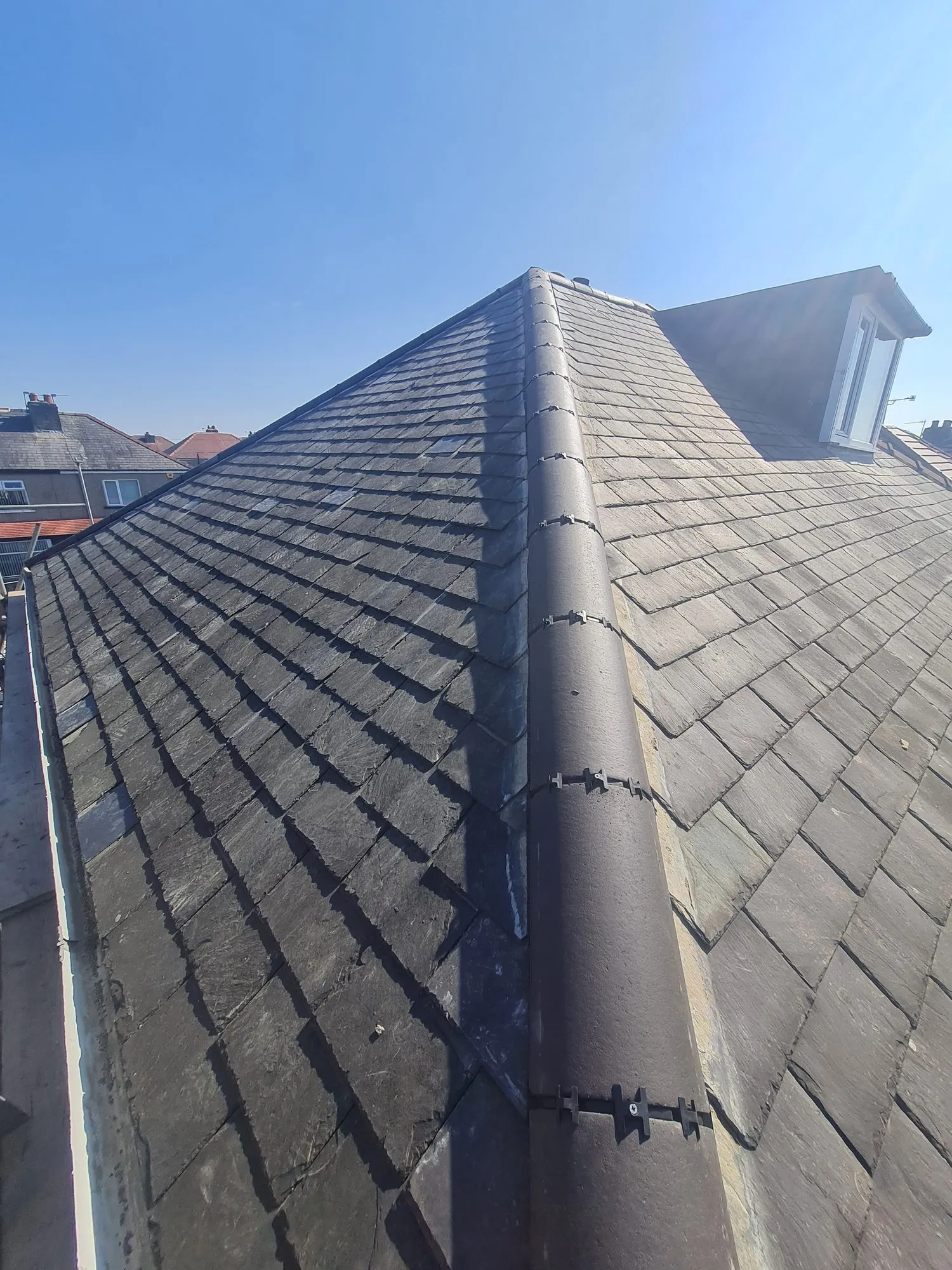
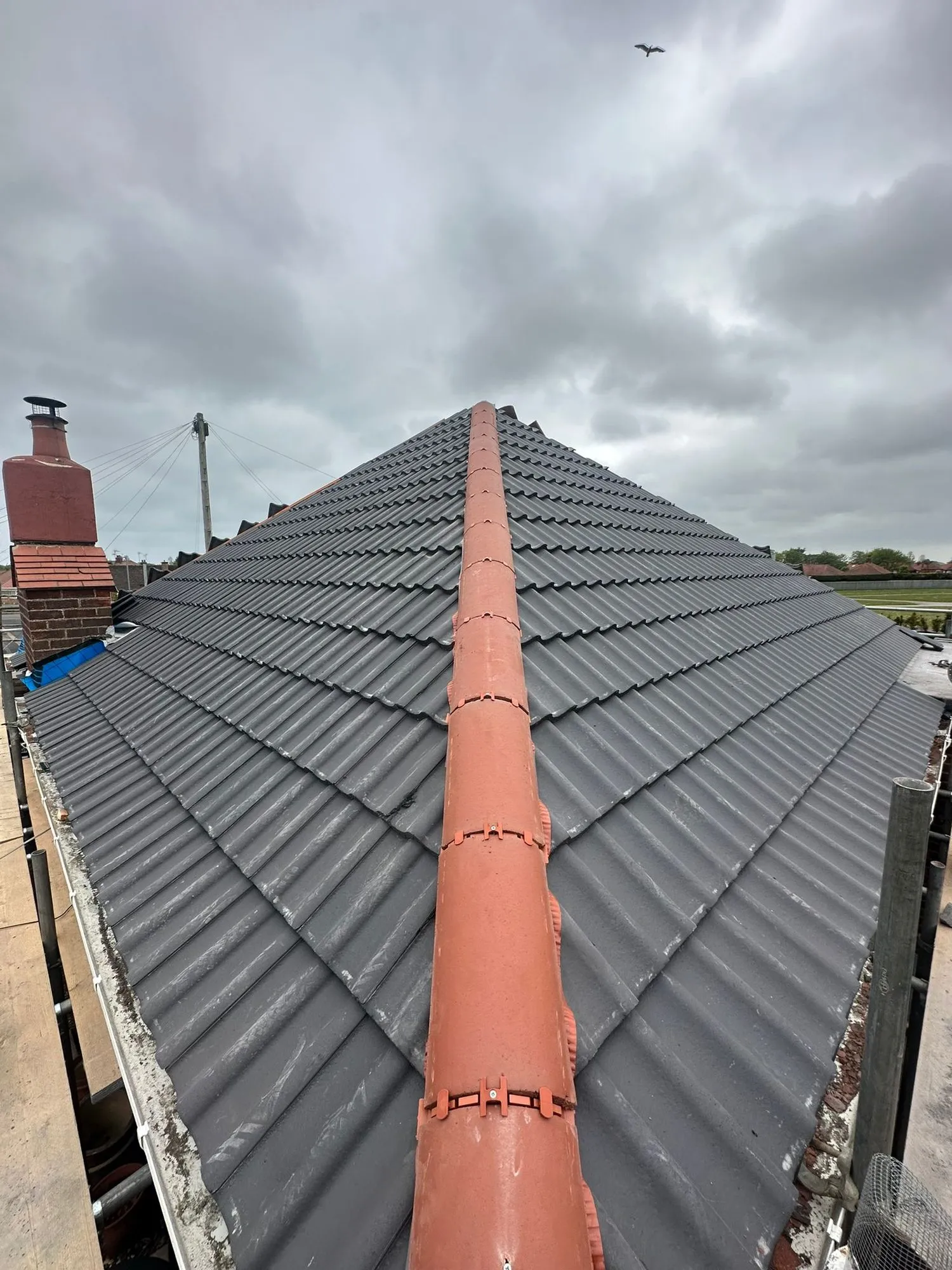
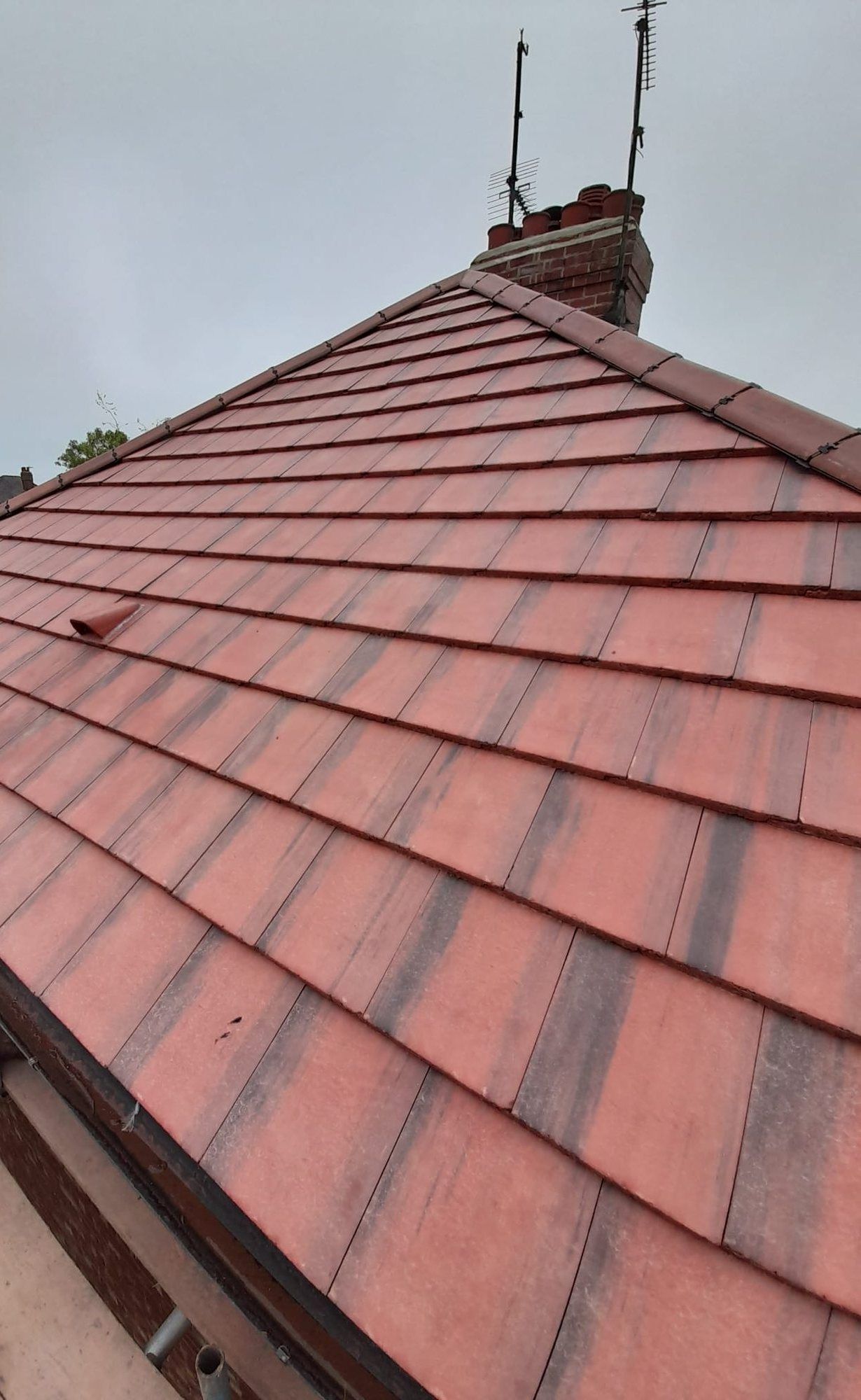
A dry-fix system clips and screws each tile in place over a ventilated strip. There’s no mortar to fail, it lets the roof breathe, and it’s how new roofs are built now.
- Quote
- Free inspection, or an estimate from your photos
- Paying
- No deposit. You pay when the job’s done
- Cover
- Fully insured, and all our work is guaranteed
- Who
- Alfie and George, NVQ-qualified roofers
Signs your ridge or verge needs attention
Things you can usually spot from the ground, a window or the loft. Never climb onto the roof yourself.
- Mortar cracked, crumbling or missing along the ridge
- Ridge or hip tiles that rock, or bits of mortar in the gutter
- Gaps along the gable edges (the verges)
- Ridge tiles lifted or lost in high winds
Why dry-fix
-
No more re-pointing
Nothing to crack or wash out, so no re-pointing the ridge every few years.
-
Holds in a storm
Every tile is mechanically fixed, as the current British Standard for roofing (BS 5534) requires.
-
Lets the roof breathe
The ventilated ridge strip helps stop condensation building up in the loft.
-
Fitted in most weather
There’s no mortar to cure, so rain and frost don’t hold the job up.
From our jobs
Dry ridge and verge: all 18 photos-
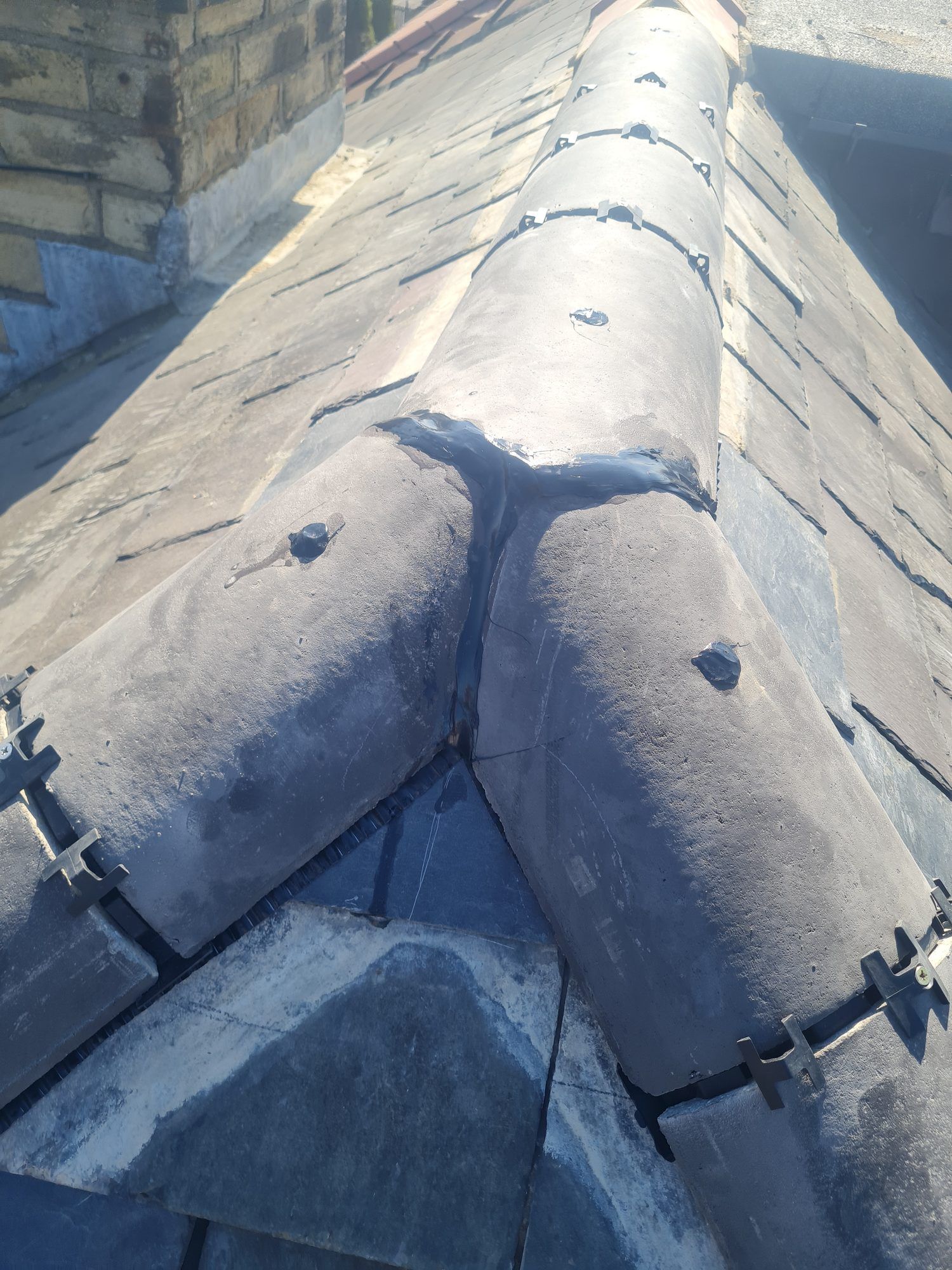
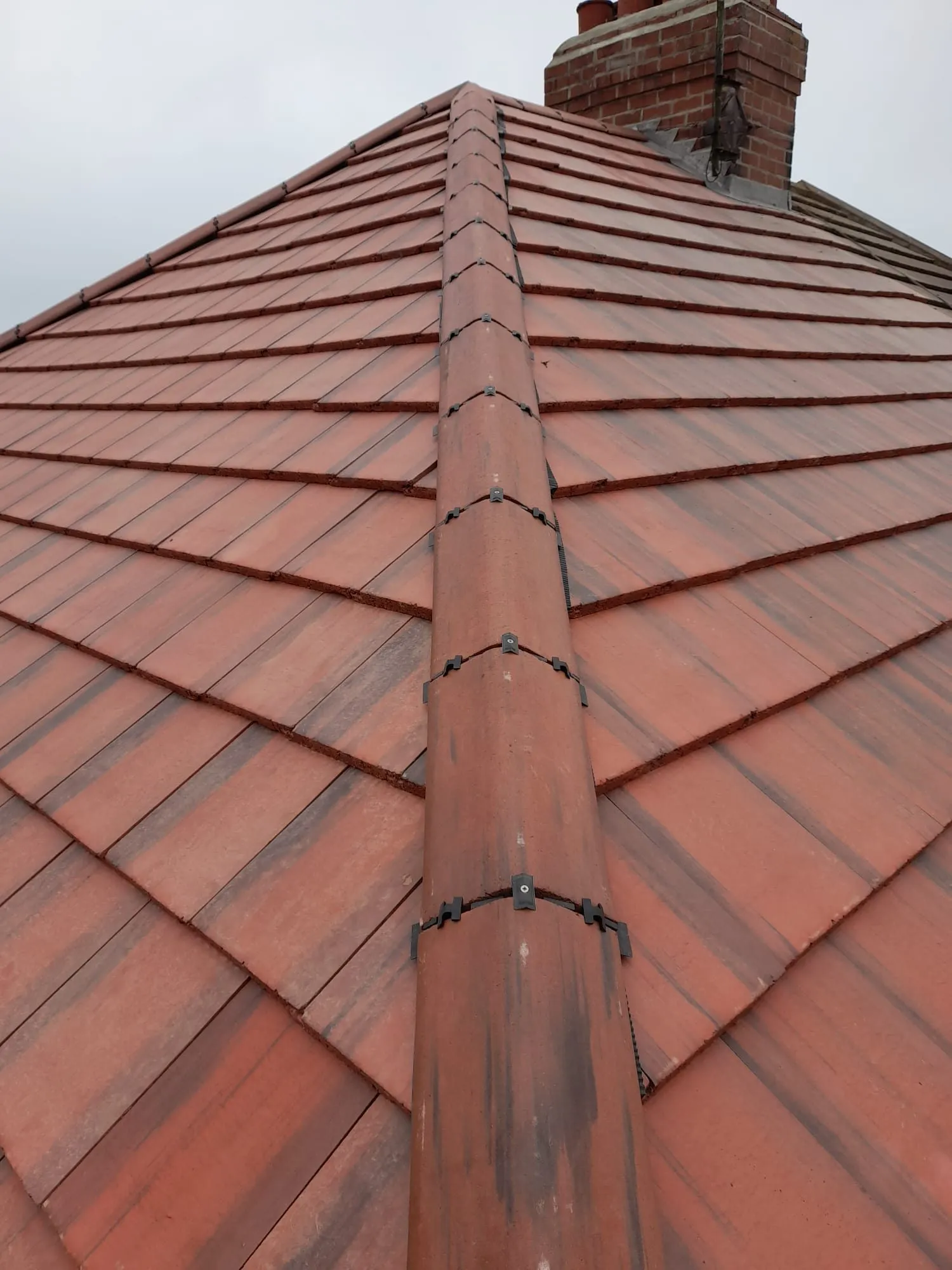
01 Dry-fix hip junction
-
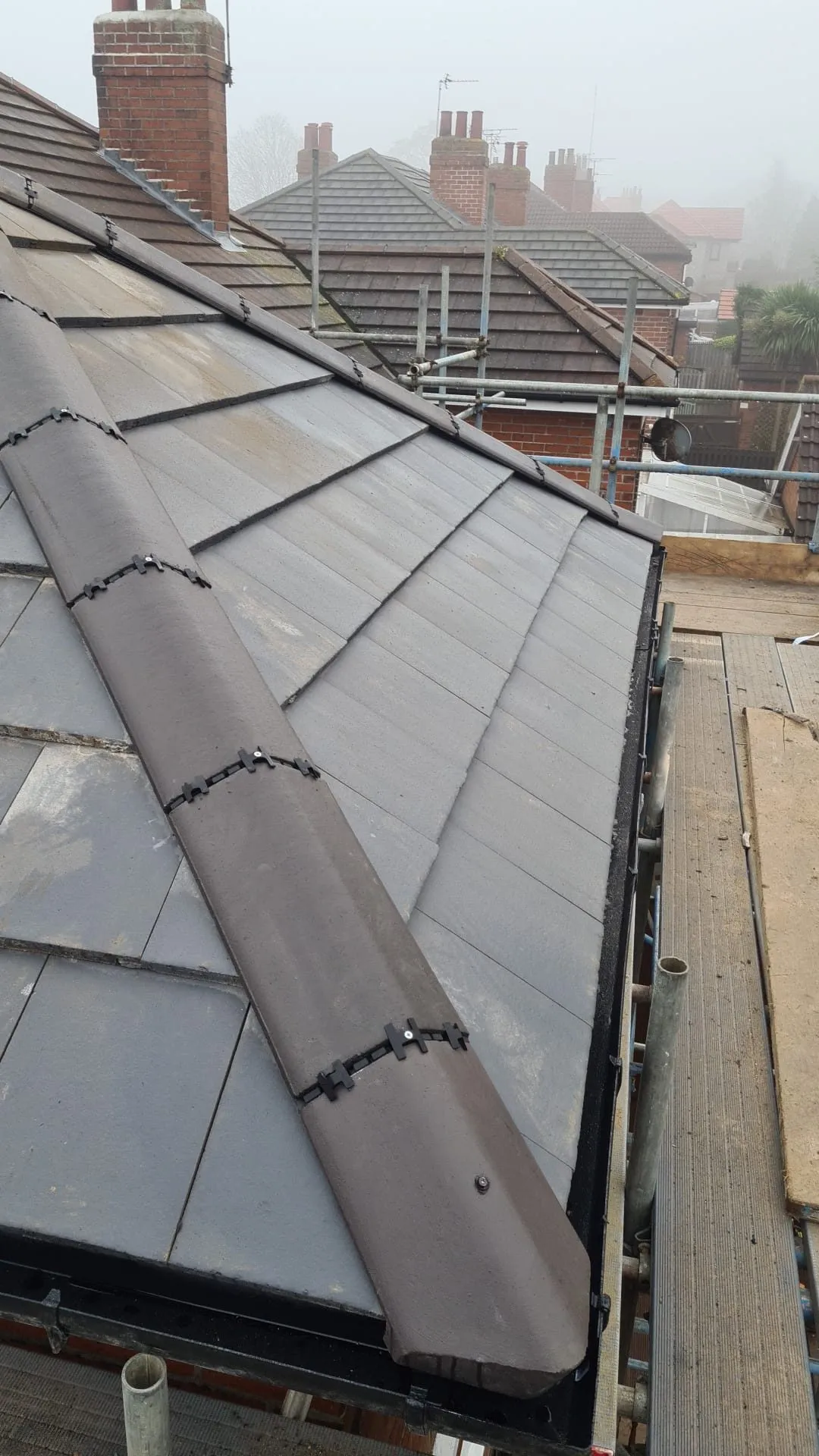
02 Dry hip on slate
-
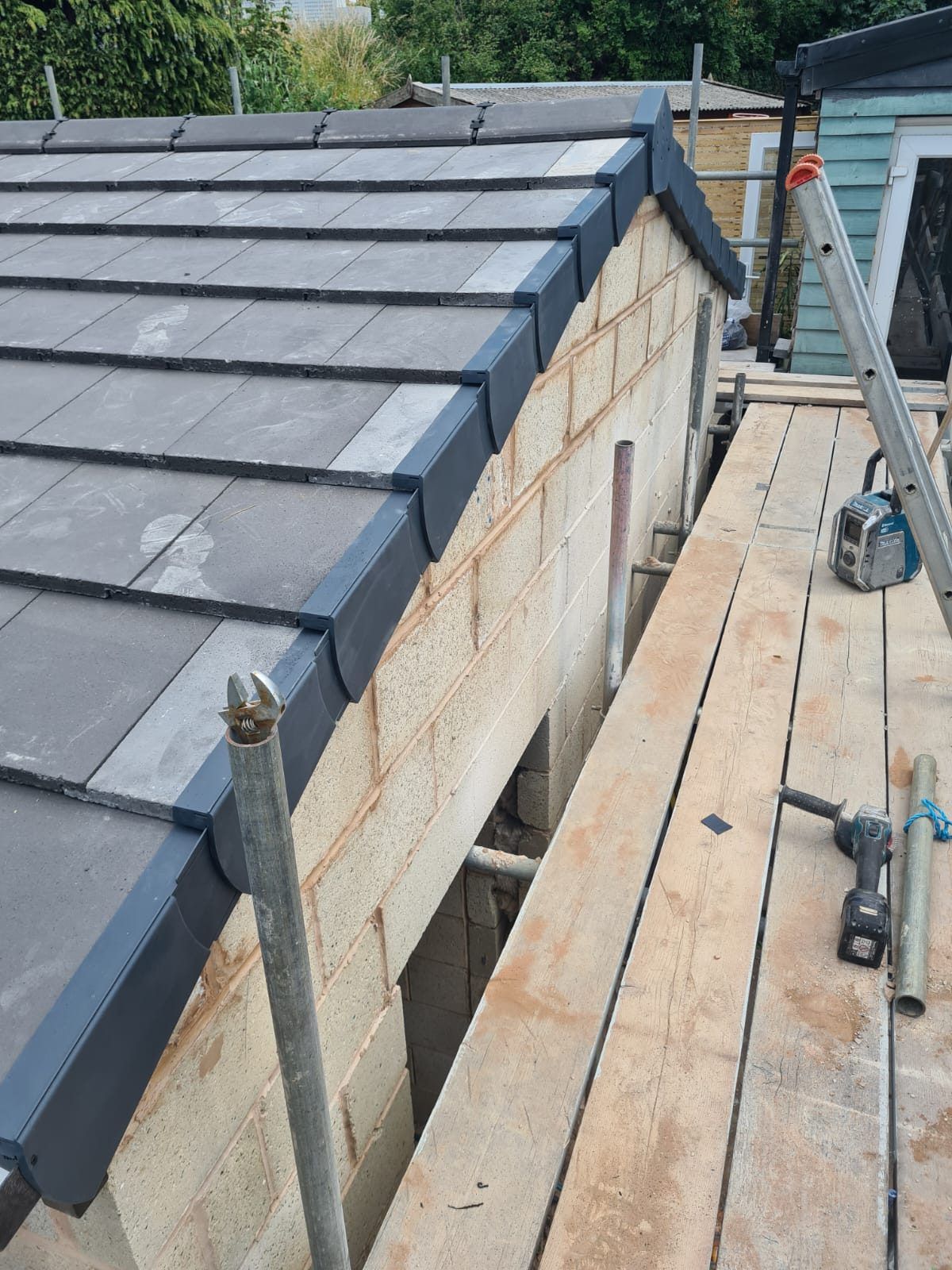
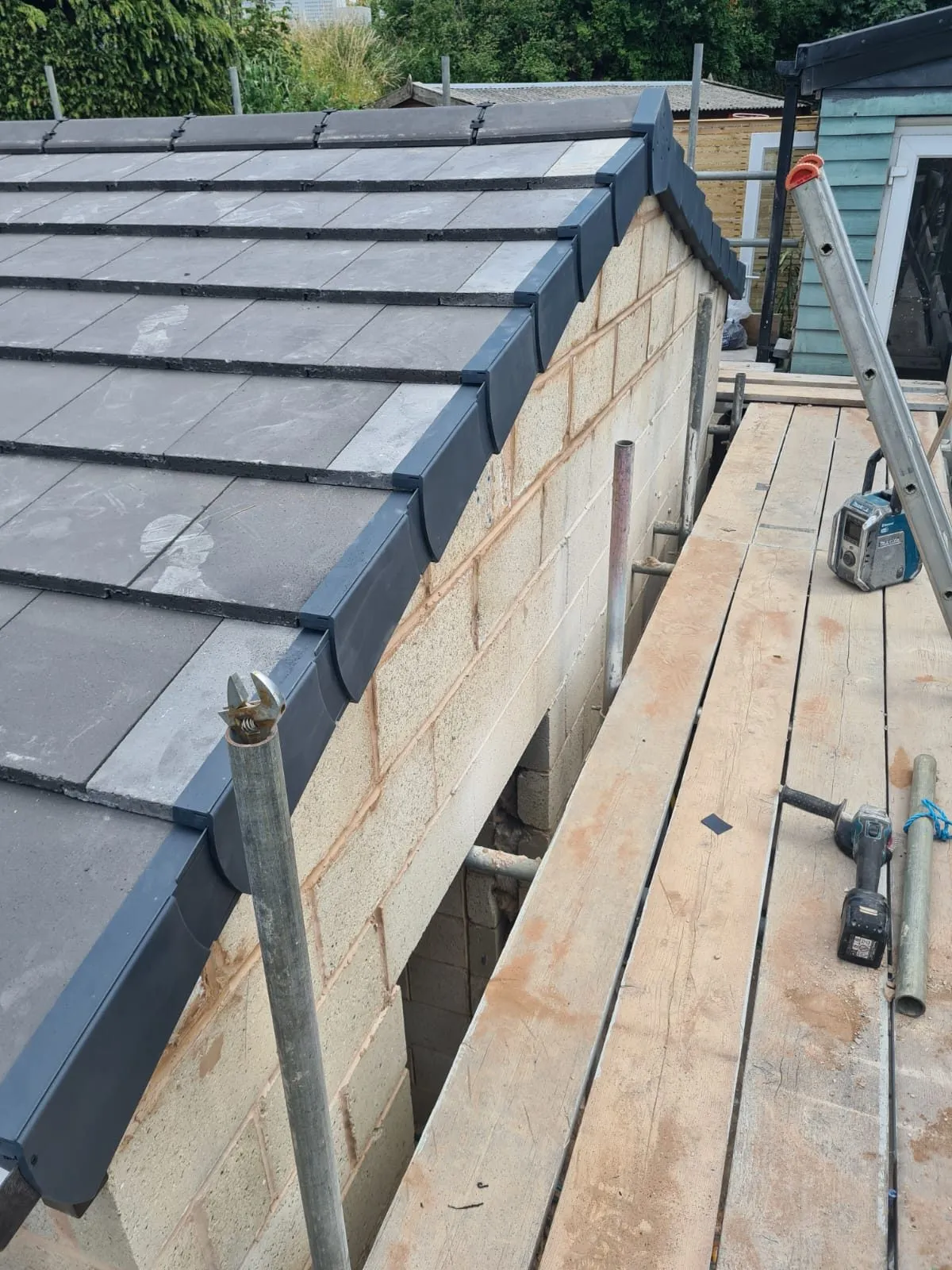
03 Dry verge end cap
-
04 Dry verge on an extension
-
05 Ridge clips
-
06 Dry ridge on slate
-
07 Dry ridge and hips
-
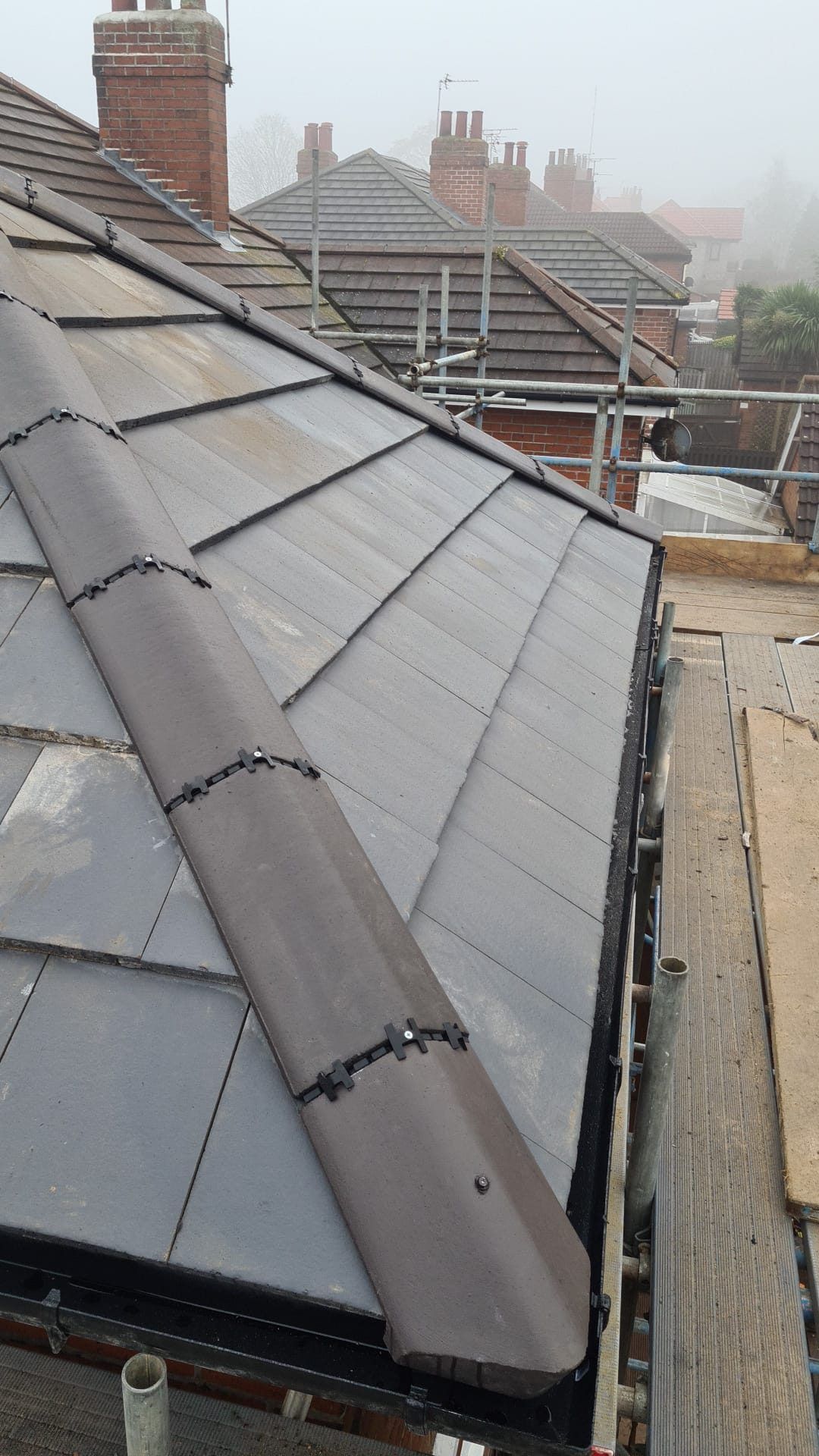
08 New dry ridge
-
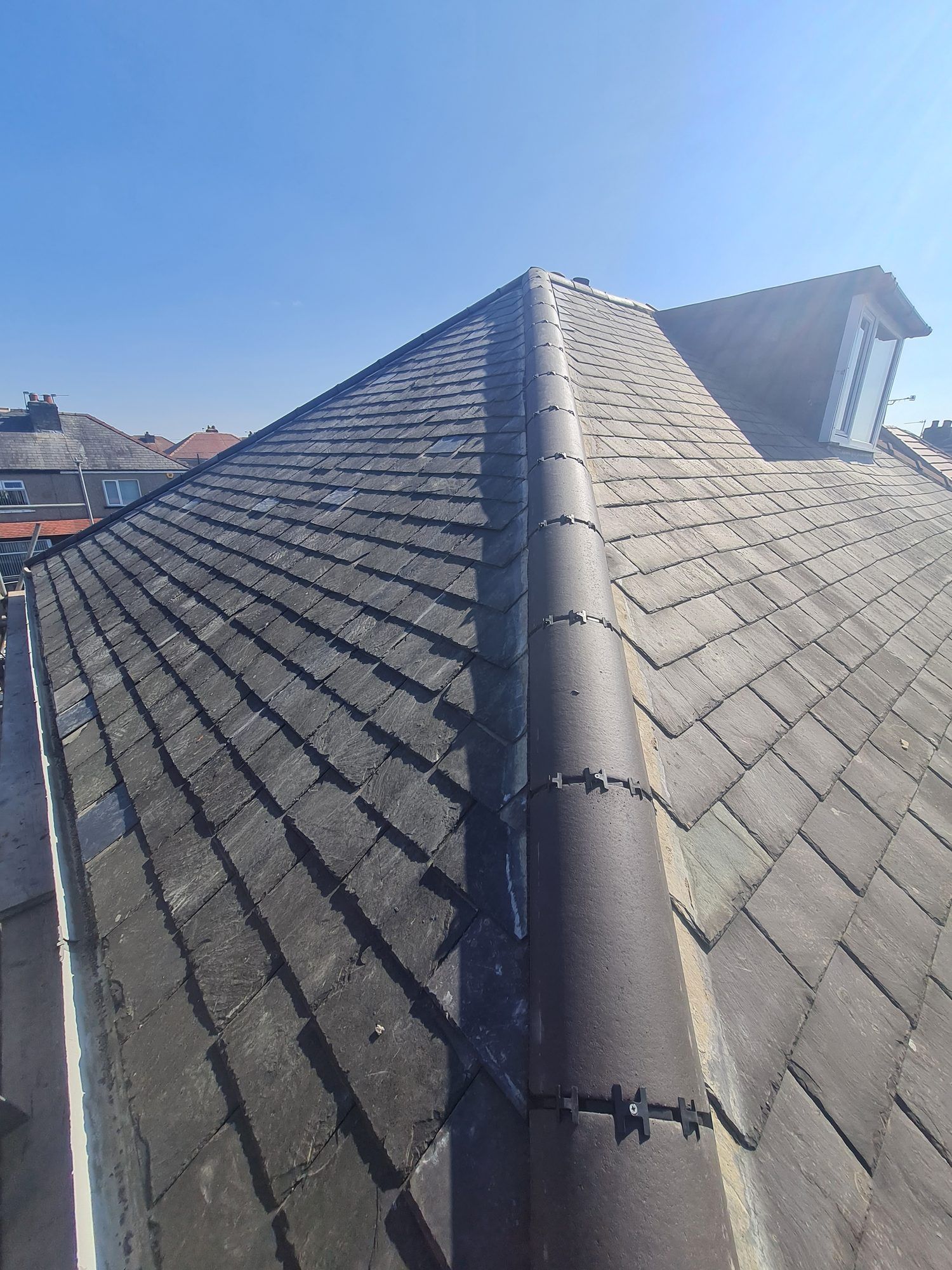
09 Dry ridge in low sun
-
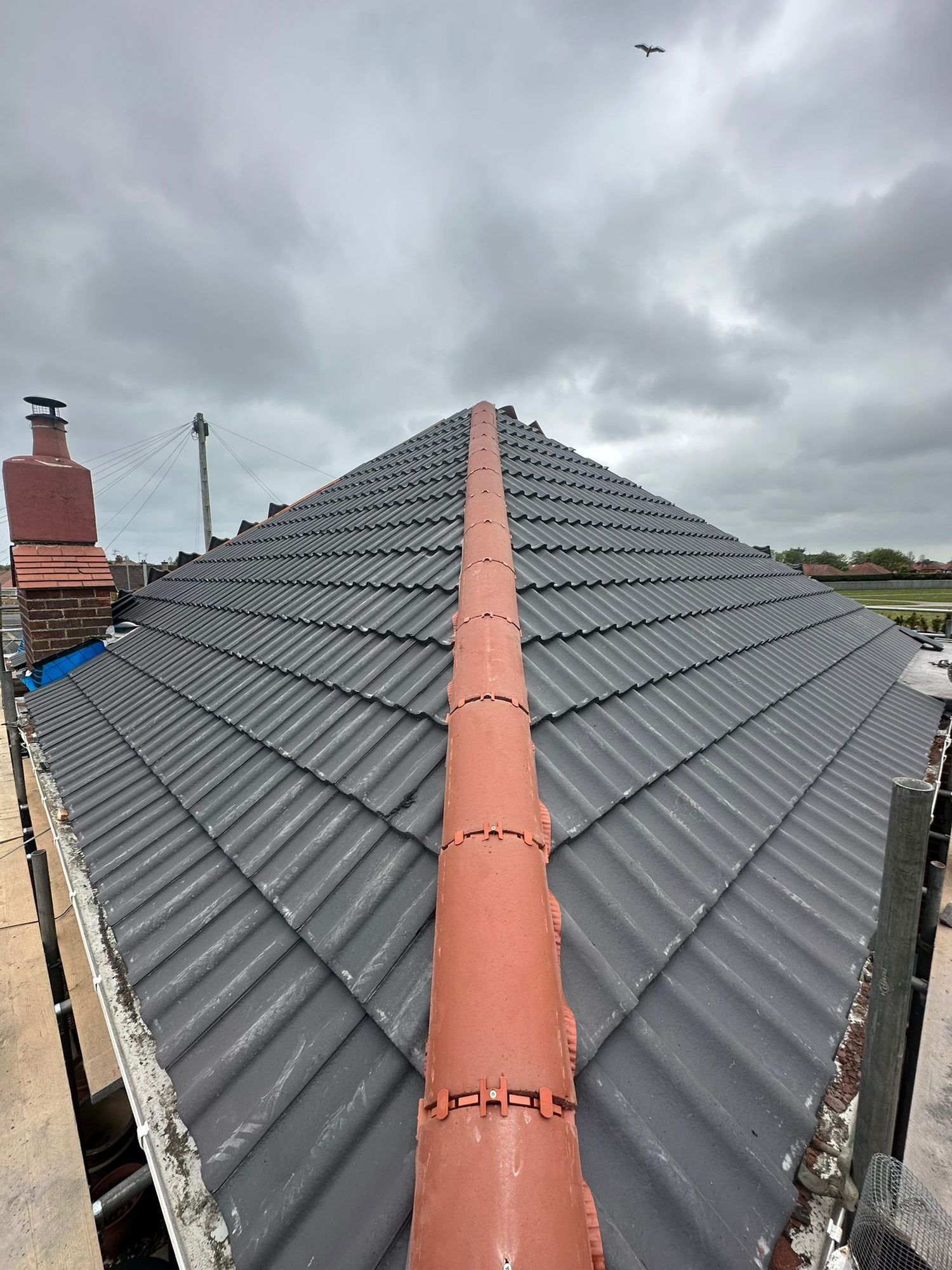
10 Red ridge on grey tiles
How a dry ridge is fitted
Simple from start to finish, with no deposit to pay.
Start with a free inspection-
Old ridge lifted
The ridge tiles come off and the old mortar is cleared away.
-
Ventilated strip
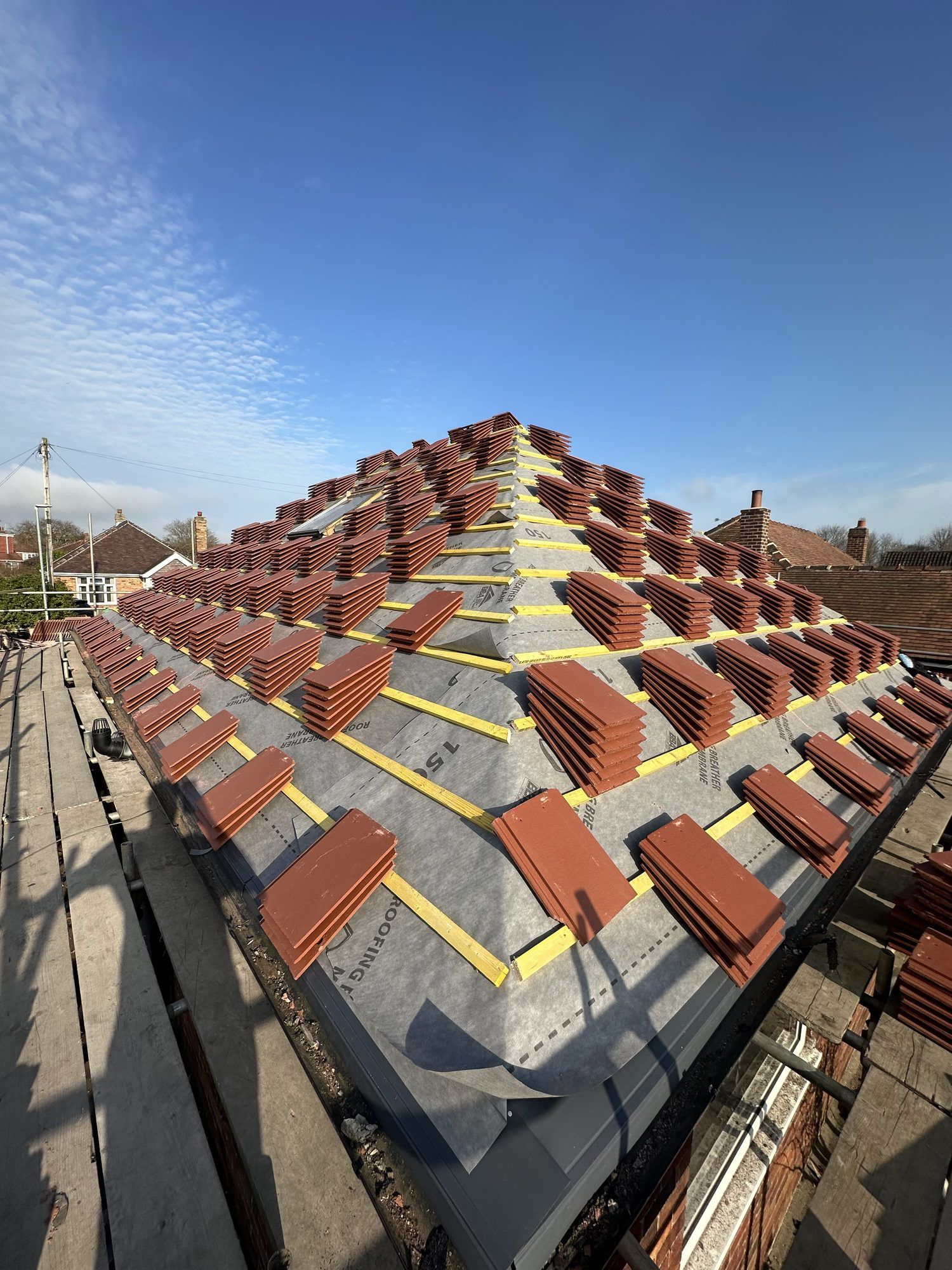
A breathable roll goes along the top of the roof, sealed to the slates or tiles each side.
-
Tiles fixed down
Each ridge tile is clipped and screwed in place, with union clips over the joints.
-
You pay when it’s done
No deposit. You pay once the job is finished.

10/10 on Checkatrade
Excellent company, highly recommended!
Two wonderful young men, they advised me on what I needed, quoted me a price and the job was completed the following day. Very polite, efficient and personable, I can certainly highly recommend them. Jenny Callaghan
Questions
Something else? See all our questions, or give Alfie a ring.
Can a dry ridge be fitted to my existing roof?
Usually, yes. We lift the old ridge tiles, clean them up or replace them, fit the ventilated strip and fix each tile back on mechanically.
Does a dry ridge look different?
From the ground, the main difference is a neater line with no grey mortar joints. Close up, you can see the clips and the edge of the strip.
Is mortar ever the better choice?
On some period houses, a traditional mortar-bedded ridge suits the building better. We can still do traditional mortar work where it’s the right choice.
Related work
All our services-
Roof repairs
Slipped slates, broken tiles, leaks and storm damage -
New roofs
Complete re-roofs in slate, clay or concrete tiles -
Chimney repairs
Repointing, flaunching, pots and flashings
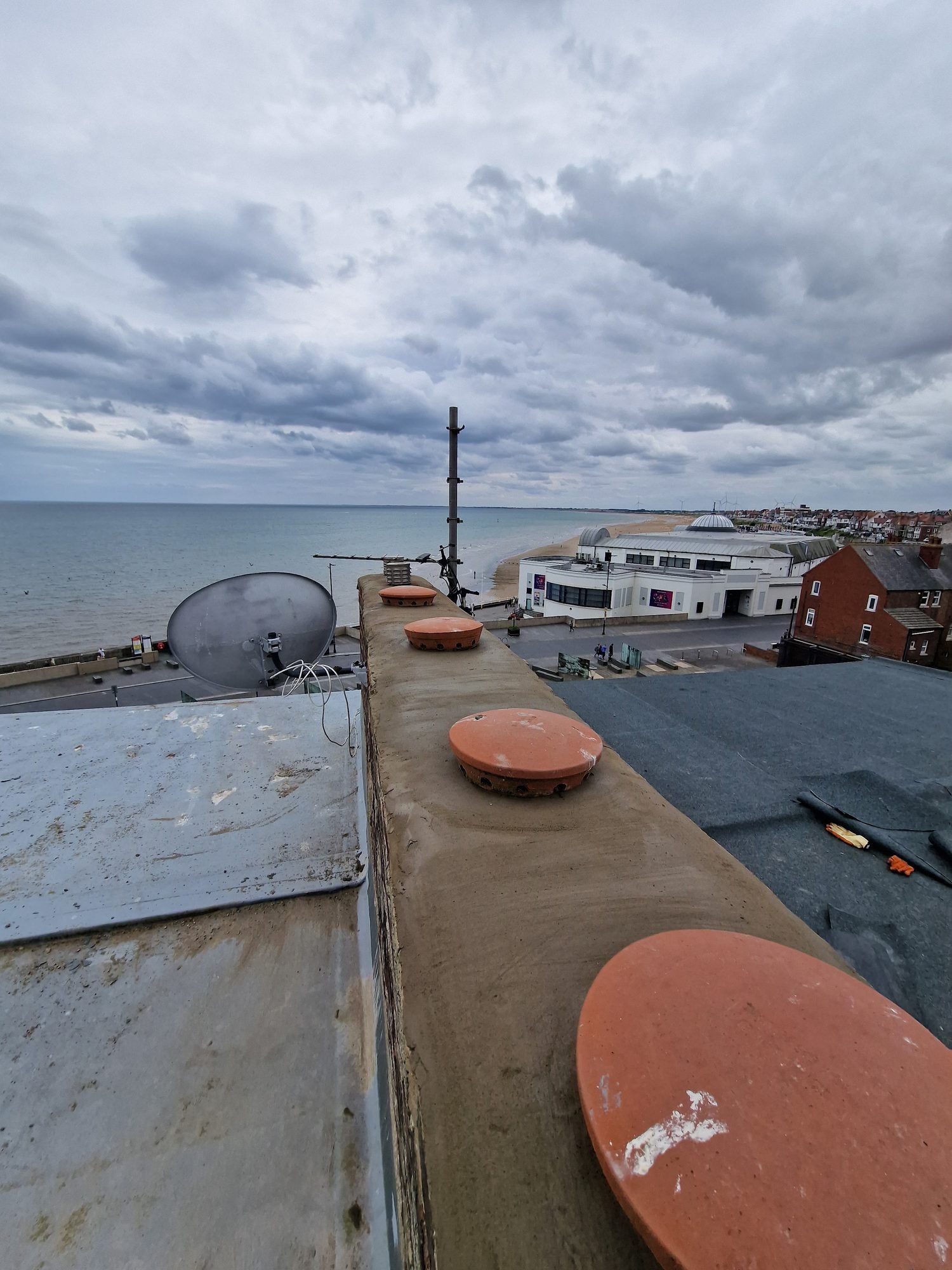
Dry ridge and verge across the coast: Bridlington , Flamborough , Bempton , Filey , Scarborough , Cayton , Hornsea , Driffield , Beverley , Hull , Pocklington , York and Malton , and the villages around them.
Book a free roof inspection
We’ll come and look at your roof, then send you a quotation. No deposit, and no obligation. Or send a few photos for a quick estimate first.