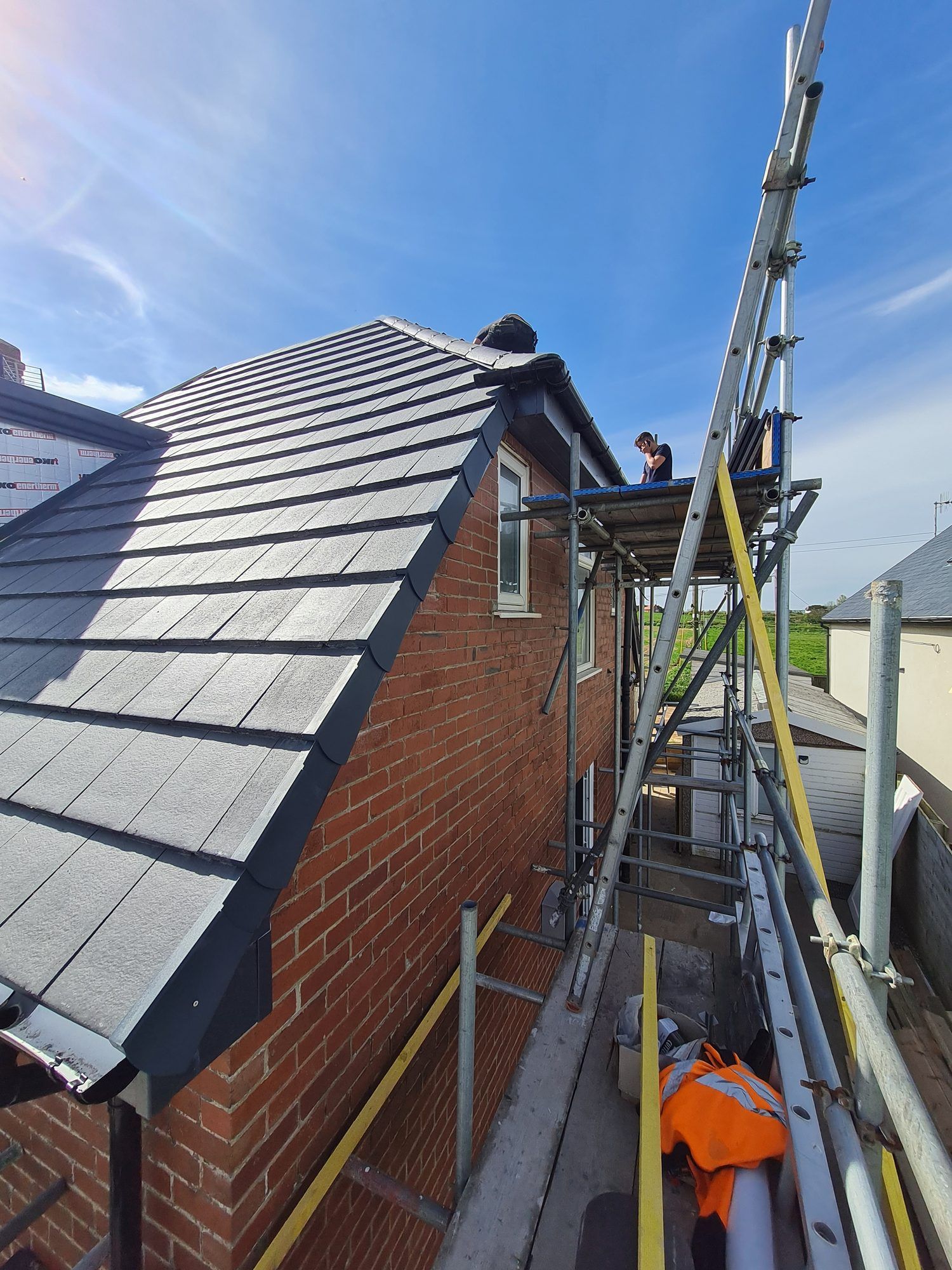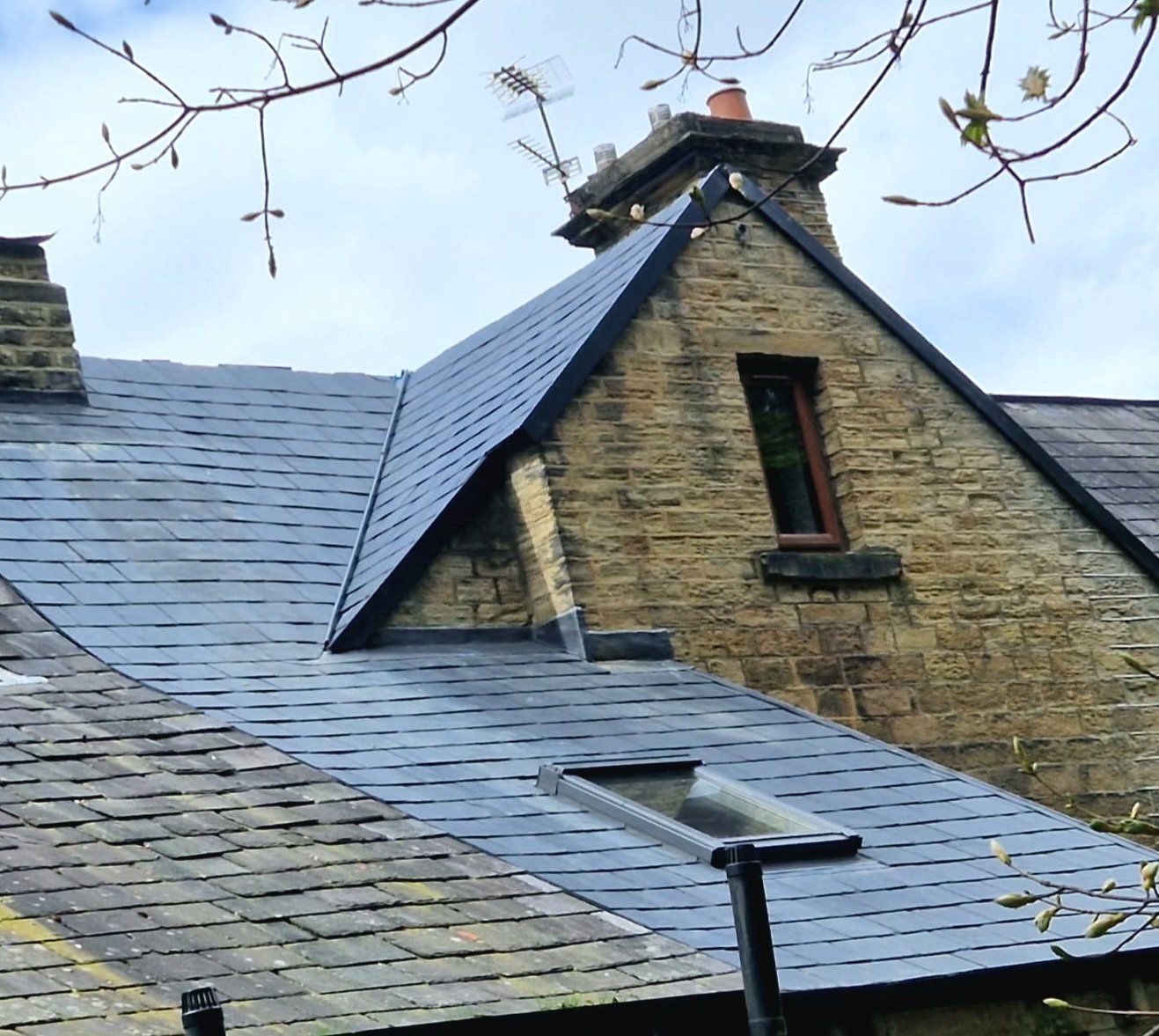
The ridge is the line of tiles along the top of your roof. For generations they were bedded in sand and cement. Most new roofs now use a dry-fix system instead. Here’s why, and when mortar is still the right choice.
Why mortar ridges fail
Mortar shrinks a little as it cures, and over the years it cracks with every cycle of heat and frost. Rain gets into the cracks, freezes and pushes them wider, until pieces fall out and the ridge tiles are only sitting in place. On an exposed coast it happens faster, and a loose ridge tile can be lifted off in a storm.
The signs are easy to spot from the ground: gaps along the ridge, tiles that look uneven, and bits of mortar in the gutters.
How a dry ridge works
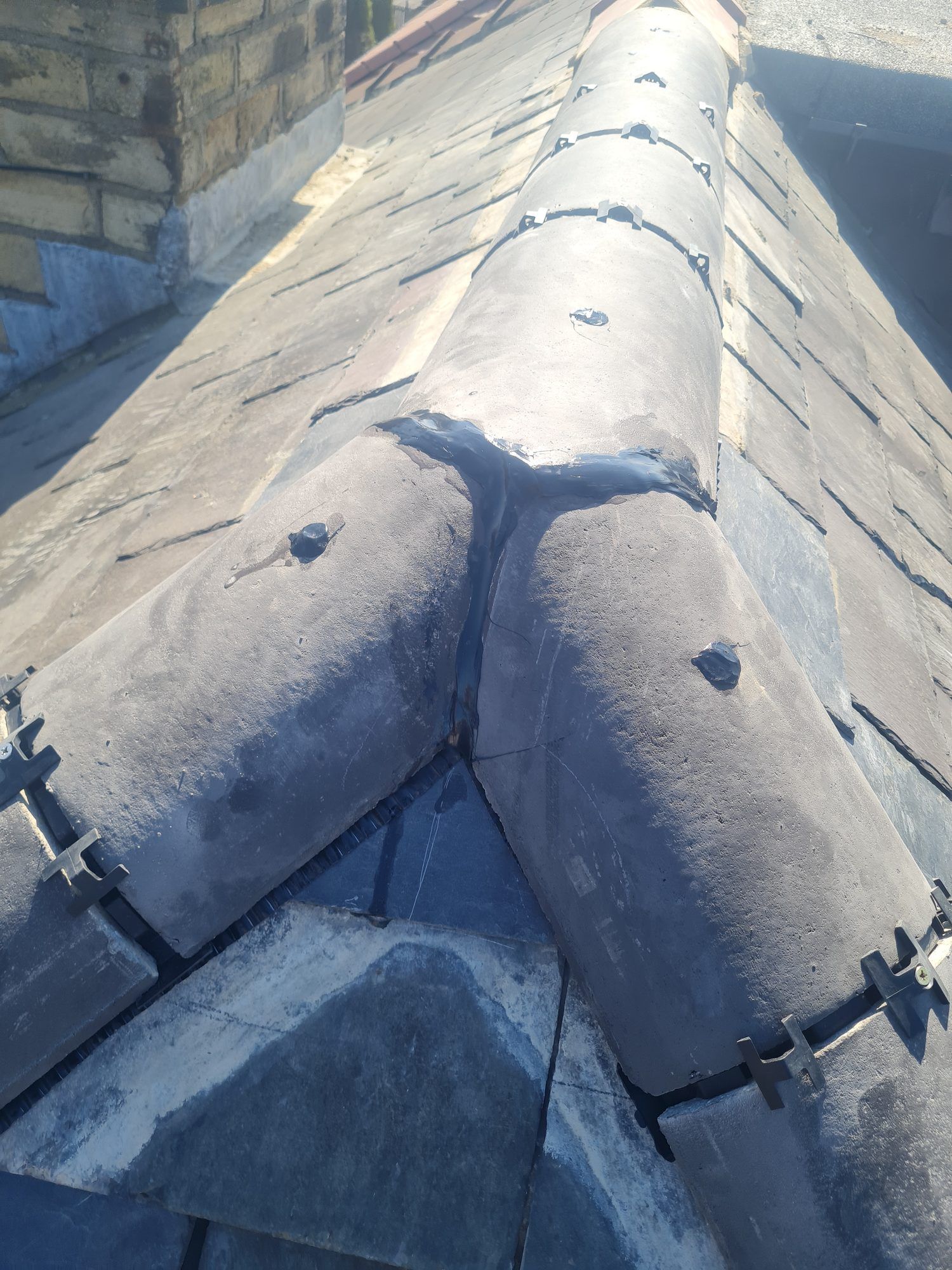
A dry-fix ridge is held on mechanically, not by mortar. A breathable roll runs along the top of the roof, sealed to the slates or tiles on each side. Each ridge tile is then screwed or clipped down, with clips over the joints between them.
Since 2015 the British Standard for slating and tiling (BS 5534) has required ridge and hip tiles to be mechanically fixed, not held by mortar alone.
The advantages
- No more re-pointing. There’s no mortar to crack or wash out, so the ridge doesn’t need re-pointing every few years.
- Stronger in high winds. Every tile is fixed down, so it can’t simply be lifted off.
- It lets the roof breathe. Most systems are ventilated, which helps stop condensation building up in the loft.
- Fitted in most weather. Mortar can’t be laid in frost or heavy rain; a dry ridge can.
When mortar is still right
On some period houses, and in conservation areas, a traditional mortar-bedded ridge suits the building better, and may be what the council expects. Done well, with the tiles mechanically fixed as well, it’s still a good job.
Dry verge, too
The verges, the edges of the roof at the gable ends, are traditionally finished in mortar as well, and fail in the same way. A dry verge clips caps over the ends of the tiles instead, for the same benefits.
Can a dry ridge go on my existing roof?
Usually, yes. We lift the old ridge, clean up or replace the tiles, fit the ventilated roll and fix every tile back down. See our dry ridge and verge page, or send us photos for a free estimate.