Every roof is different, so the only way to get an accurate price is for someone to look at yours. But it helps to know what makes one roof cost more than another before you ask for quotes, so you can compare them properly.
What decides the price
- Size and shape. A simple pitched roof costs less than one with hips, valleys and dormers, which all take more time and more materials.
- Slate or tiles. Concrete tiles are the most affordable. Clay tiles and pantiles cost more, and natural slate is the premium choice.
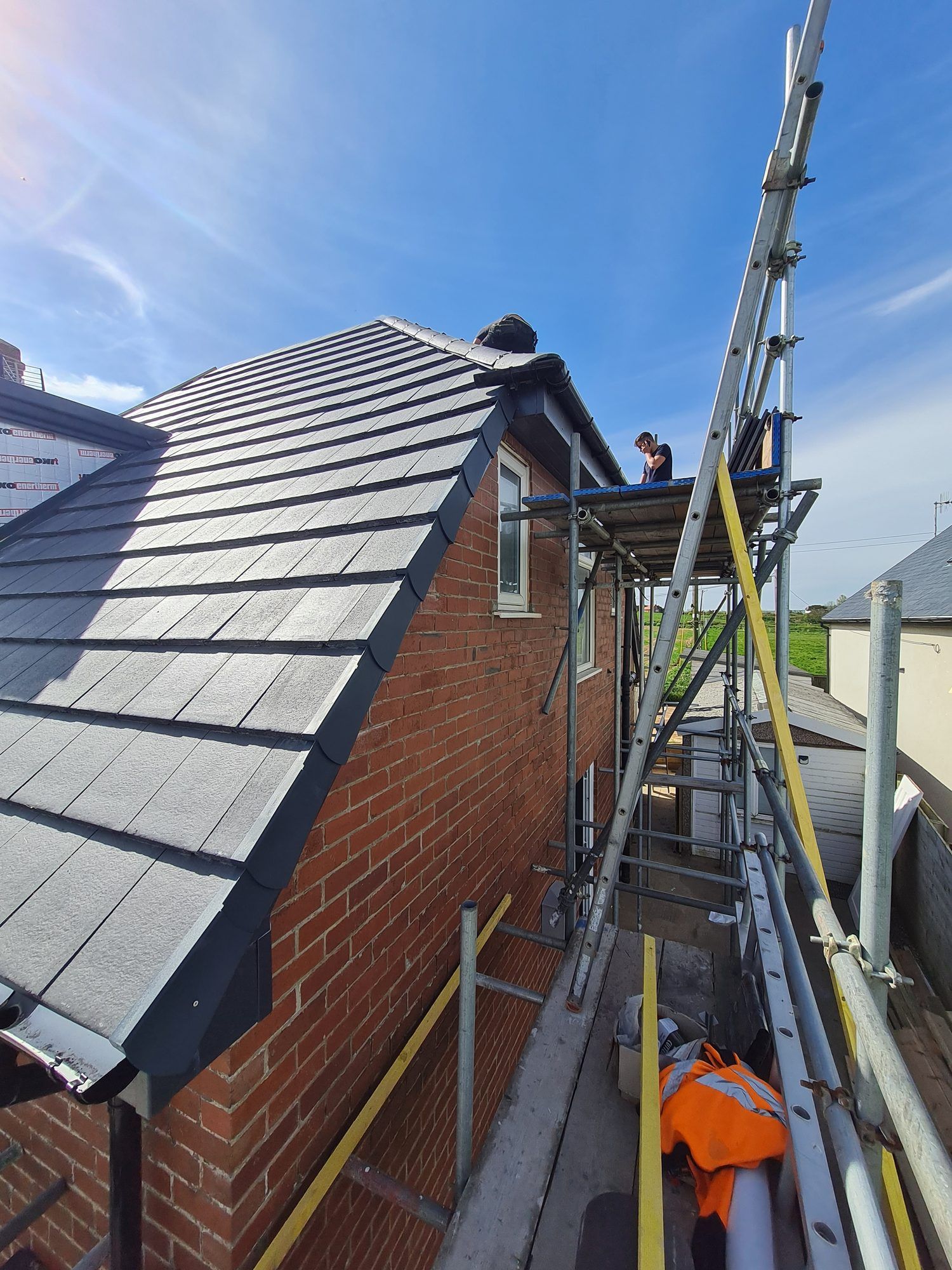
- Scaffolding and access. The height of the house, how easy it is to get to, and whether scaffolding has to go over a neighbour’s land or a conservatory.
- The timbers underneath. Rotten battens are replaced as a matter of course. If rafters need repair, that adds to the cost, and it can only be fully checked once the old roof is off.
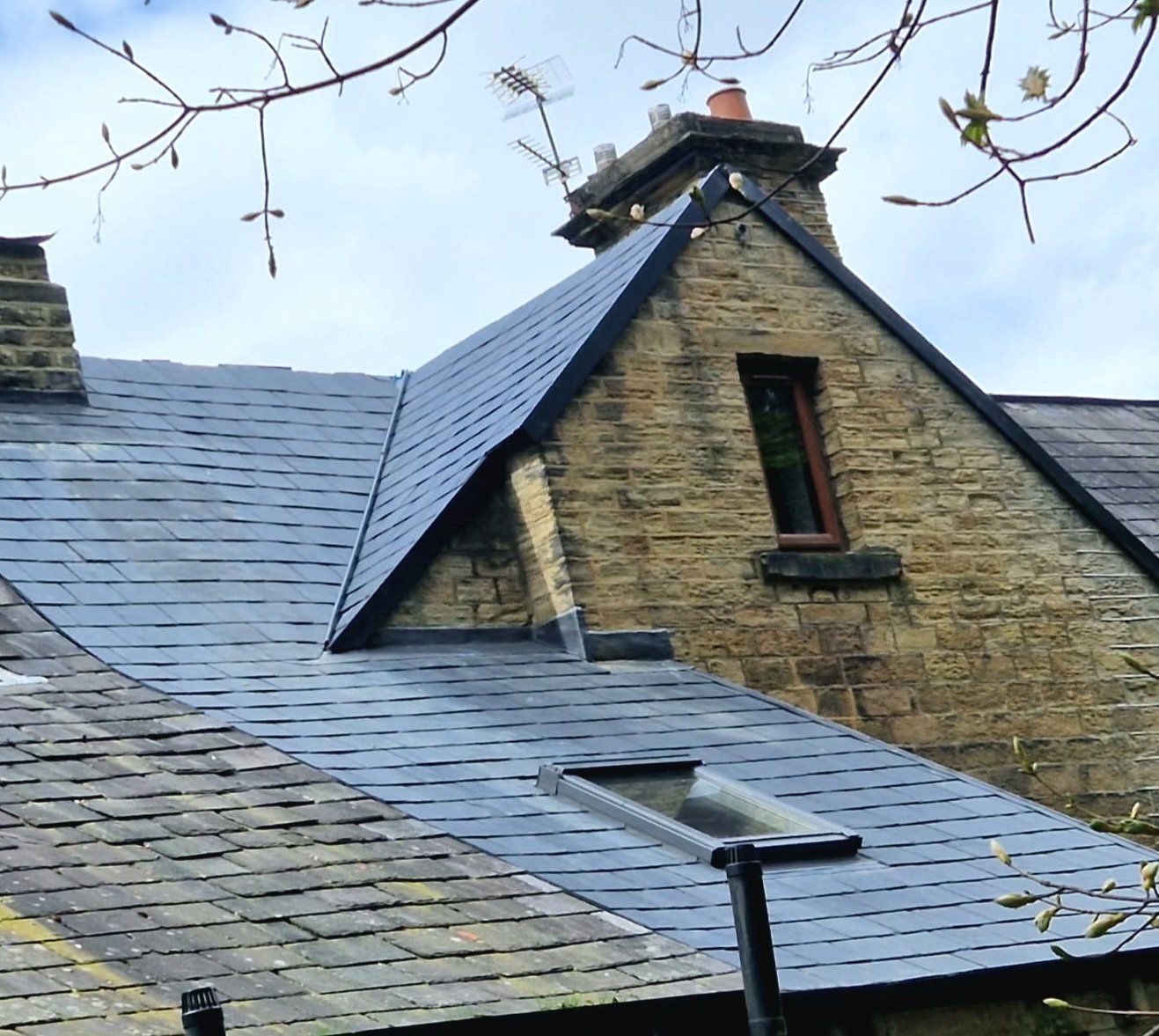
- The extras. Chimneys, leadwork, roof windows, and new fascias, soffits and gutters while the scaffolding is up.
- Clearing away. Taking away the old slates or tiles, felt and battens.
Signs it’s time for a new roof
Some problems can be repaired. Several of these together usually mean a new roof is the better long-term answer:
- Leaks in more than one place, or leaks that keep coming back after repairs. That points to the felt or underlay failing across the roof.
- Slates or tiles slipping again and again. Losing a few in a storm is normal. Constant slipping can mean the battens underneath have rotted, or the nails have rusted through.
- Daylight in the loft. On a bright day, with the loft light off, specks of daylight mean a direct way in for water.
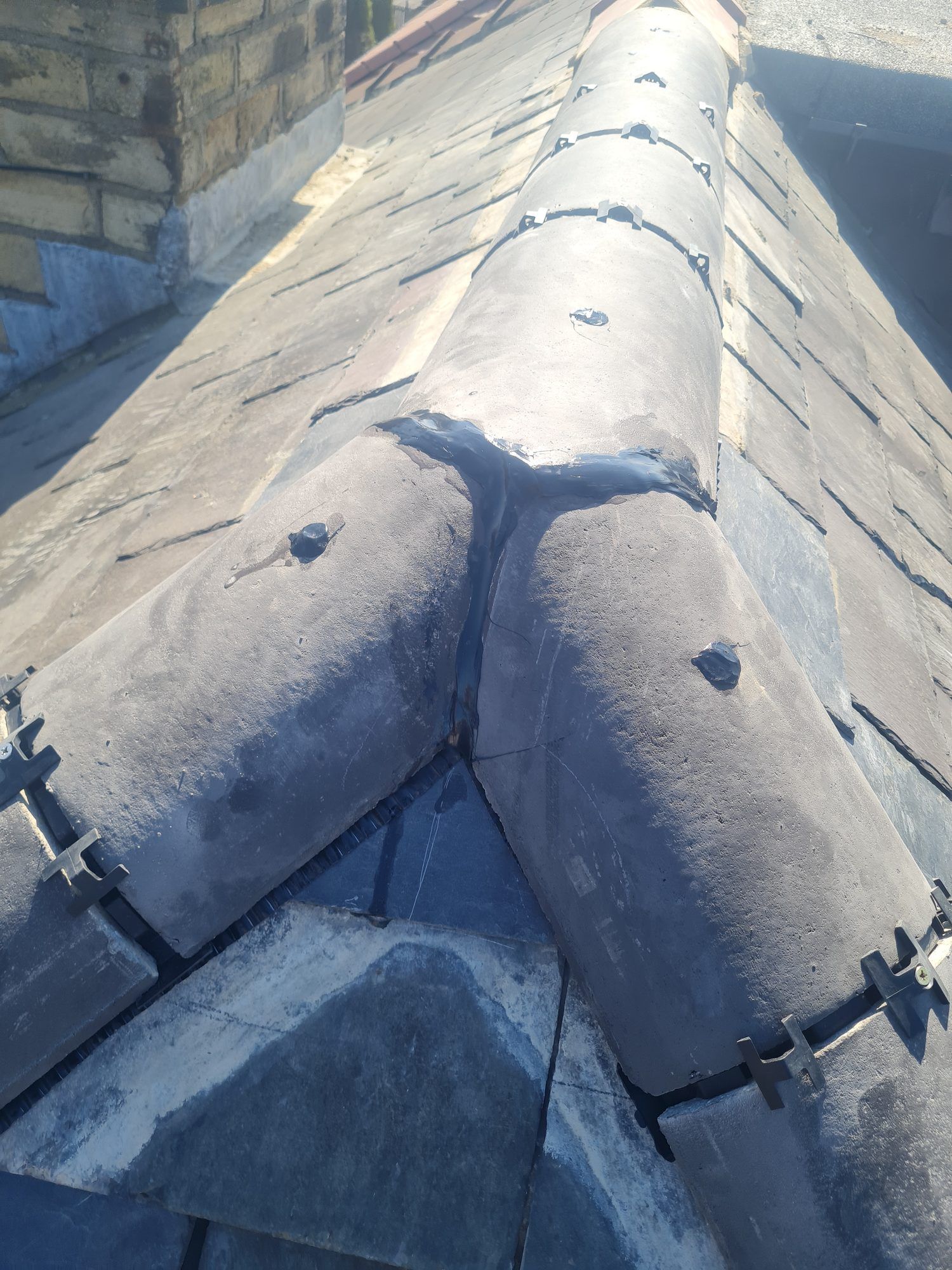
- Mortar falling out of the ridge and hips. On older roofs the mortar cracks and washes out, leaving the ridge loose.
- Heavy moss, and grit in the gutters. Thick moss holds water against the tiles, and lots of grit washing off them means the tiles themselves are wearing out.
- Sagging between the rafters. A dip in the roof line can mean the timbers or battens are struggling.
Repair or replace?
A single leak or a few slipped slates can almost always be repaired, and that’s usually the cheaper answer. When a roof has several of the problems above at once, you can end up paying for repair after repair. That’s when a new roof becomes the better value, because it puts everything right in one go.
We’ll always tell you which we think it is, and why.
What a proper new roof includes
- Stripping the old covering, felt and battens back to the rafters, and replacing any rotten timber.
- A breathable membrane, which lets moisture out of the loft while keeping rain out, as current British Standards require.
- New treated battens, set out for the slates or tiles you’ve chosen.
- Slates or tiles fixed properly, with dry-fix ridges, hips and verges that won’t wash out.
- New leadwork and flashings where the roof meets walls and chimneys, and proper ventilation.
Getting a price for your roof
Send us photos through our free estimate form and we’ll come back with a price. If you go ahead, we visit first to measure up and check the timbers before any work starts. There’s no deposit, and you pay when the job’s done.